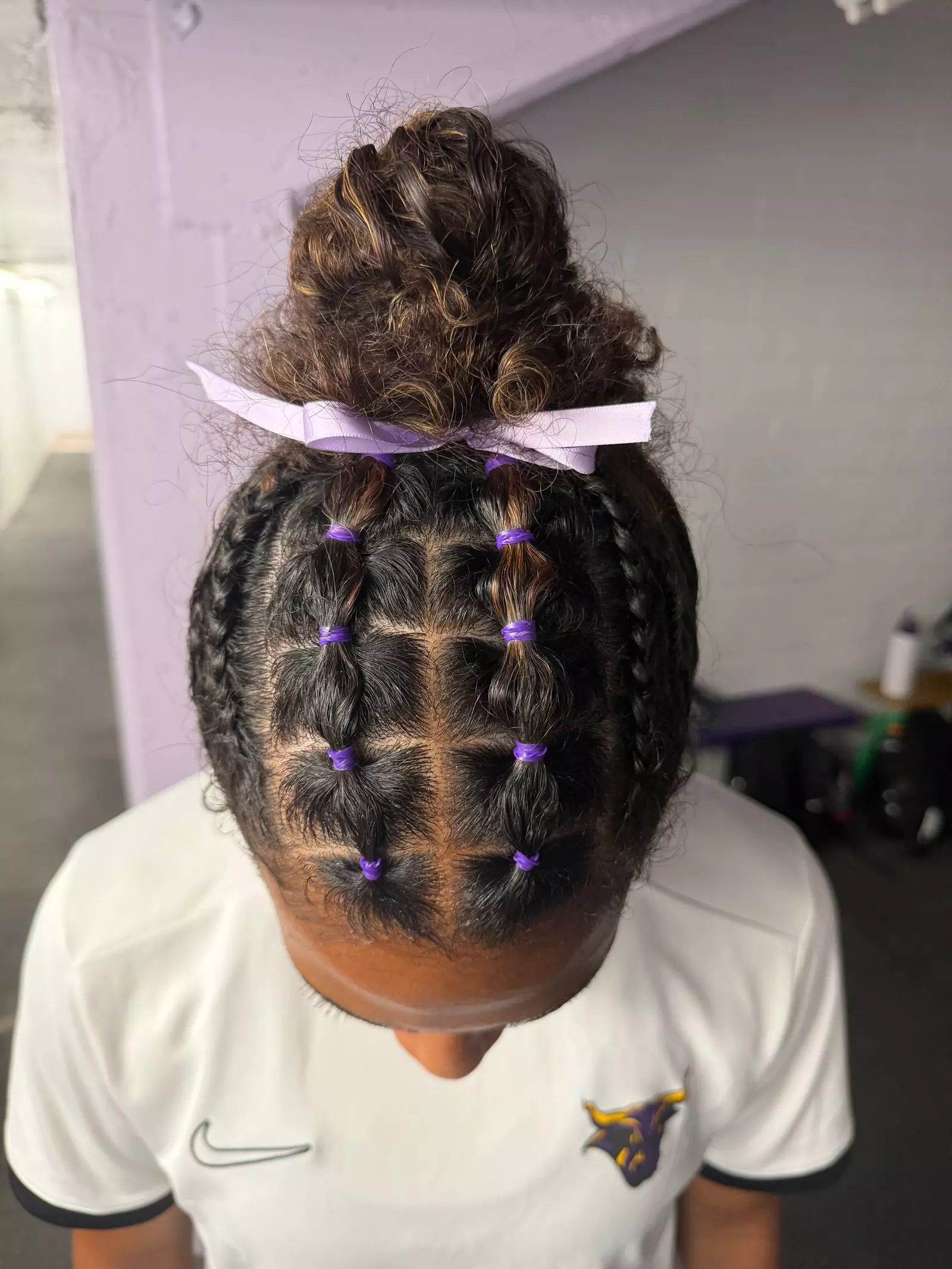
Beyond the Game: How Creative Hairstyles Unite a College Soccer Team
ByAndré Leon Talley
The Minnesota State University Mavericks women's soccer team showcases exceptional talent on the field, maintaining an impressive record of six wins, zero losses, and one draw. Their success is attributed not only to skill but also to a powerful team motto: "Look good, feel good, play good." A central element of this philosophy is the elaborate game-day hairstyles crafted by player Ella Huettl. What began as a casual way to bond with teammates has evolved into a viral phenomenon, captivating audiences online and fostering an even stronger sense of community within the team. These creative hair designs serve as more than just aesthetic choices; they are a ritual that prepares the athletes mentally and emotionally for competition, embodying their collective spirit.
Historically, female athletes have faced intense scrutiny regarding their appearance, with hair often being a subject of strict policing in sports. The expectation was to conform to a 'neutral male default' through simple, understated styles to avoid unnecessary challenges. However, a significant shift has occurred in recent decades, championed by trailblazing athletes like Serena and Venus Williams with their beaded braids, and Flo-Jo, who proudly wore her long hair down. These women, alongside figures like Megan Rapinoe with her distinctive pink crop, have transformed hair into an integral part of their athletic identity. This evolution reflects a broader movement towards self-expression and personal branding within sports, challenging old norms and celebrating individuality on the playing field.
The Art of Game-Day Hair: A Unifying Ritual
For the Minnesota State Mavericks women's soccer team, pre-game hair styling has transcended a mere grooming routine to become a cherished ritual that significantly enhances team cohesion and individual confidence. Ella Huettl, the team's designated stylist, meticulously plans her schedule to accommodate a core group of teammates, sometimes styling up to eleven players before a single game. This process involves a collaborative effort where teammates either select from previously created styles or present new inspirations from social media platforms like Pinterest and TikTok. Huettl embraces these challenges, constantly refining her techniques and adapting to diverse hair textures, a skill she developed through dedicated practice and open communication with her peers. This shared experience in the locker room, filled with creativity and mutual support, transforms nervous energy into collective excitement and readiness for the match.
Assistant coach Lizzy Vetter notes the increasing flexibility in hair regulations at the collegiate level, allowing players to express themselves freely. This freedom of expression through hair contributes to a positive team atmosphere, fostering a sense of belonging and camaraderie. The styling sessions are not just about aesthetics; they are intimate moments of bonding, where players like Ruthie Gyasi share product recommendations and techniques, further strengthening their relationships. These pre-game preparations, from intricate dragon braids to bubble ponytails adorned with colorful ribbons, instill a sense of pride and unity. The team's motto, "Look good, feel good, play good," is vividly brought to life through these personalized hairstyles, which serve as a visual testament to their collective identity and shared journey.
Cultural Impact and the Sisterhood of Sport
The practice of braiding hair has deep historical roots, often symbolizing intimacy and community building. In the context of the Minnesota Mavericks, Ella Huettl's hair-styling initiative has cultivated a powerful sense of sisterhood that extends far beyond the soccer pitch. Teammates like Meghan Sullivan and Anna Stromberg view their game-day hairstyles as essential pre-game rituals, bordering on superstition, that contribute to their performance and confidence. This collective engagement in hair styling creates a unique shared experience, reinforcing the bonds among the players and making each individual feel valued and supported. The team's vibrant hair culture has garnered significant attention online, with Huettl's social media channels becoming a source of inspiration for athletes nationwide.
The Mavericks' creative approach to game-day hair has influenced other teams, promoting a broader acceptance of expressive hairstyles in women's sports. The use of themed accessories, such as green elastics for Mental Health Awareness Games or pink details for Breast Cancer Awareness Games, further demonstrates how hair styling can be a powerful tool for advocacy and community engagement. This movement challenges traditional perceptions of female athleticism, showing that femininity and competitive spirit are not mutually exclusive. While Ella Huettl currently views her styling as a hobby, its profound impact on team morale, individual confidence, and the wider sporting community suggests a lasting legacy. The shared moments of braiding, laughter, and mutual encouragement cement memories that will endure long after graduation, solidifying the idea that true success encompasses not only athletic achievement but also the invaluable bonds forged through shared experiences.
About the author
André Leon Talley
Former creative director and editor-at-large at Vogue, a towering and influential figure in fashion journalism.