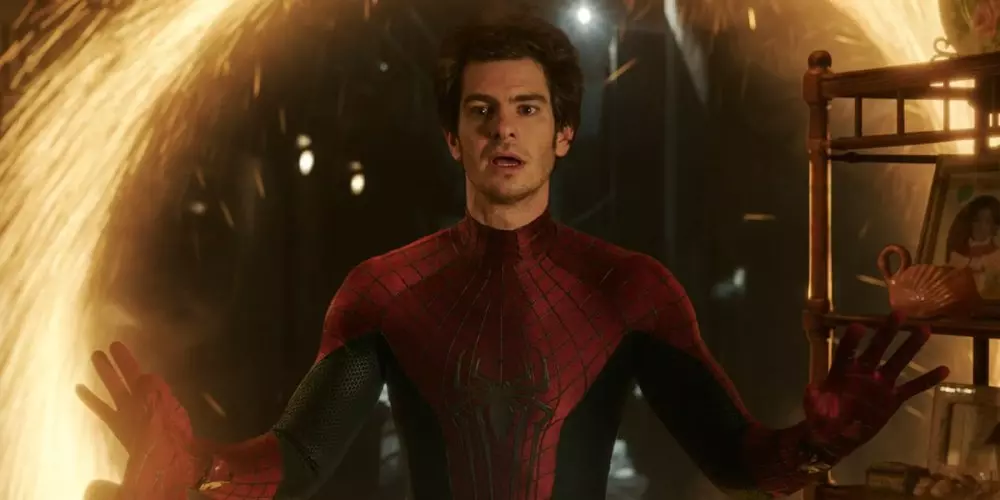
Andrew Garfield's Enduring Vision for an Inclusive Spider-Man
ByStephen King
This article explores Andrew Garfield's consistent advocacy for a more inclusive portrayal of Spider-Man, focusing on his long-standing belief that the character's appeal lies in its universal relatability, transcending traditional boundaries of gender and sexuality.
Championing Inclusivity: A Decade-Long Vision for Spider-Man
Garfield's Groundbreaking Suggestion in 2013: A "Gay Spider-Man"
In 2013, during the promotion of "The Amazing Spider-Man 2," actor Andrew Garfield sparked considerable discussion with his unconventional ideas about the iconic superhero's potential identity. He openly pondered why the character couldn't explore different facets of his personal life, specifically suggesting a scenario where Peter Parker's romantic interest, Mary Jane, could be a male, or that Peter himself could be gay. Garfield reportedly engaged in these discussions with producer Matt Tolmach, emphasizing the progressive nature of such a character evolution.
Advocating for Interracial Bisexuality in Superhero Narratives
Expanding on his vision for a more diverse Spider-Man, Garfield even proposed a specific actor, Michael B. Jordan, to take on the role of a male MJ. He expressed his admiration for Jordan's charisma and talent, noting how this casting choice would introduce an element of "interracial bisexuality" to the franchise. This suggestion highlighted Garfield's desire for superhero stories to mirror the rich tapestry of human experience, embracing a broader spectrum of identities and relationships.
Reaffirming the Universal Appeal of Spider-Man: A Recent Reflection
More than a decade later, while on a press tour for Paul Greengrass's "The Uprising," Garfield was once again asked to revisit his 2013 comments regarding a gay Spider-Man. He characterized his initial remarks as an act of "rebellion" fueled by a deep conviction. Garfield articulated that the enduring popularity of Spider-Man stems from the character's ability to be a blank canvas onto which anyone can project themselves, irrespective of their background or identity.
Embracing Diverse Representation: "Why Not?"
Garfield elaborated on his philosophy, expressing a preference for narratives that honor and include everyone. He framed his advocacy for a gay Spider-Man as a simple question: "Why not?" He suggested that any strong opposition to such an idea would reveal more about the objector's own biases than about the character's essence. His stance underscores the belief that true universality in storytelling requires open-mindedness and a willingness to challenge conventional portrayals.
The Expanding Horizon of Spider-Man's Legacy: Miles Morales
The conversation around Spider-Man's evolving identity continues, with current live-action Spider-Man actor Tom Holland also voicing support for greater diversity within the franchise. Holland has expressed a keen interest in bringing the character of Miles Morales, another prominent iteration of Spider-Man, to the big screen. This signifies a collective recognition within the industry for the need to adapt and diversify beloved characters to resonate with an ever-broadening audience, reflecting varied experiences and backgrounds.
About the author
Stephen King
Prolific author of horror and suspense, who also writes extensively on the craft of writing and pop culture.