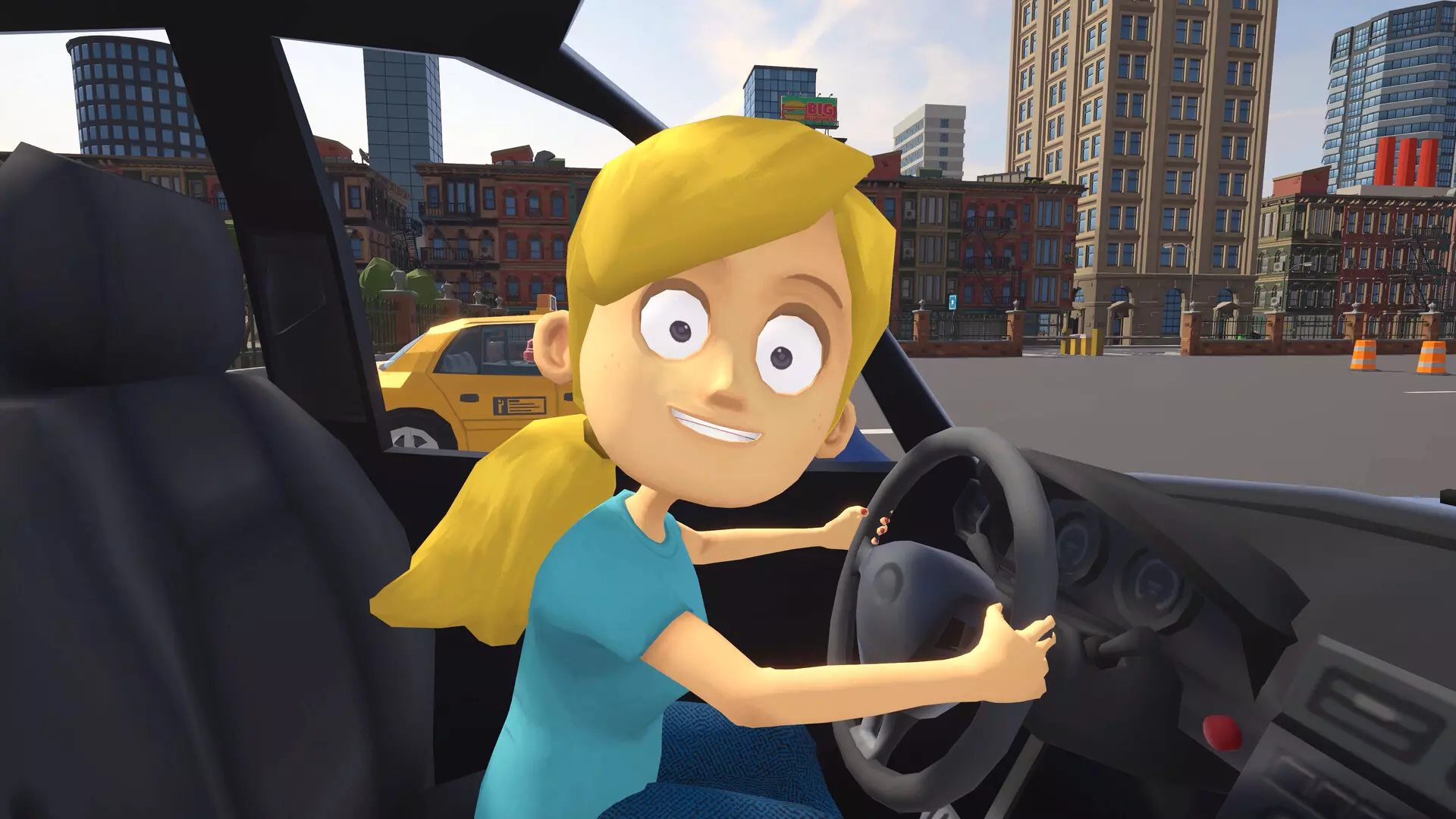
AI-Powered Driving Simulator Faces Financial Hurdles with Rising AI Costs
ByKim Swift
The integration of advanced AI, particularly large language model (LLM) powered chatbots, into video games holds immense potential for creating dynamic and interactive experiences. However, this innovative approach comes with significant financial implications, as recently demonstrated by the creators of the driving instruction simulator, “Teach My Little Sister How To Drive.” A dramatic increase in player engagement for the game's demo has led to an unforeseen spike in operational expenses, forcing the development team to seek external financing to sustain the project. This situation underscores a critical challenge for the gaming industry: balancing the creative possibilities of AI with its often unpredictable and escalating costs, ultimately questioning the long-term economic feasibility of certain AI-driven game designs.
As the gaming world continues to explore the frontiers of artificial intelligence, developers are finding that incorporating AI-driven elements, such as interactive chatbots, can lead to substantial and often unpredictable operational costs. The case of “Teach My Little Sister How To Drive” exemplifies this dilemma, where a sudden surge in popularity, while welcome, has created a significant financial burden. The costs associated with running AI services, particularly the continuous processing of LLM tokens, can quickly accumulate, presenting a major hurdle for smaller studios. This situation highlights the need for robust financial planning and innovative solutions to manage these expenses, ensuring that groundbreaking AI-powered gaming experiences can remain accessible and sustainable.
The Unforeseen Costs of AI in Gaming
The developers behind the AI-powered driving instruction simulator, "Teach My Little Sister How To Drive," have encountered substantial financial strain due to the unexpected popularity of their game's demo. With a twentyfold increase in player numbers, the daily expenditure on AI services has soared past $1,000. This unforeseen rise in costs is primarily attributed to the demand for LLM-powered chatbots that enable players to interact with a virtual sibling during driving lessons. This situation brings to light the inherent volatility and unpredictable nature of integrating advanced AI technologies into gaming, as increased user engagement directly translates to higher computational resource consumption and, consequently, greater expenses for AI token usage. The studio's reliance on a bank loan to cover these escalating costs underscores the challenges developers face in accurately forecasting and budgeting for AI-driven game mechanics, particularly when faced with viral success.
The integration of sophisticated AI models, such as LLMs, into games like "Teach My Little Sister How To Drive" offers a novel gameplay experience, allowing players to verbally interact and provide instructions to an AI-driven character. However, the operational costs associated with these advanced AI services have proven to be a significant barrier. The developers initially released a demo, which saw a massive surge in users, leading to a daily AI expenditure exceeding $1,000. This financial burden is not due to the high cost per player but rather the sheer volume of concurrent users engaging with the AI. This highlights a critical issue within the burgeoning field of AI gaming: while player numbers drive success, they also directly escalate the costs of maintaining the AI infrastructure. The developers are now in a precarious position, needing to find a sustainable business model to cover these continuous costs without charging players for individual AI token usage after the game's purchase. The long-term financial viability of such AI-intensive games remains a complex challenge, prompting exploration into alternative solutions like local AI models, though these options typically cater to only a fraction of the player base.
Navigating the Future of AI-Driven Games and Financial Sustainability
The financial challenges encountered by the developers of "Teach My Little Sister How To Drive" highlight a broader issue concerning the long-term economic viability of AI-powered games. Despite the innovative gameplay, the high cost of maintaining LLM chatbots poses a significant risk, potentially forcing the demo to close prematurely. The developers' plan to embed AI usage costs into the game's purchase price, rather than charging per token, aims to provide a clear financial boundary for players. However, this strategy still faces the inherent unpredictability of AI token costs, which even tech giants struggle to accurately forecast. The studio is actively exploring solutions like offering local AI models for players with powerful GPUs, but this is a limited solution that doesn't address the broader cost implications for most users. The situation underscores the need for sustainable economic models and technological advancements to make sophisticated AI integration more accessible and financially manageable for game developers.
The dilemma faced by "Teach My Little Sister How To Drive" sparks a crucial conversation about the future of AI in gaming, especially regarding economic sustainability. The developers are grappling with the reality that an engaging AI experience comes with a hefty price tag, forcing them to consider the early closure of their popular demo. Their proposed solution of including AI costs in the game's initial purchase price is an attempt to mitigate continuous financial outlays, but it doesn't entirely solve the problem of fluctuating AI service charges. The uncertainty surrounding AI token pricing, even for major corporations, adds another layer of complexity. While local AI processing for high-end PCs is a potential avenue, it caters to a niche audience and doesn't offer a universal solution. This situation prompts reflection on whether the current model of relying on external, costly LLM services is sustainable for a game designed around continuous AI interaction. Ultimately, the success and widespread adoption of AI-driven narratives and mechanics in gaming may depend on significant advancements in cost-effective AI solutions or a re-evaluation of game design to reduce reliance on expensive, constantly running external AI services.
About the author
Kim Swift
Video game designer known for pioneering work on "Portal," focusing on innovative puzzle mechanics.