Aerospace Engineers Use Steam Deck for Mars Rover Control
ByMark Rosewater
In an unexpected twist of technological convergence, aerospace engineers have found an innovative use for a popular handheld gaming device. During the development and testing phases of a Mars rover prototype, a modified Steam Deck has become the unlikely interface for human operators to guide the robotic explorer. This ingenious application highlights the versatility of modern electronics and the creative problem-solving inherent in advanced engineering projects.
Details of the Martian Mobility Innovation
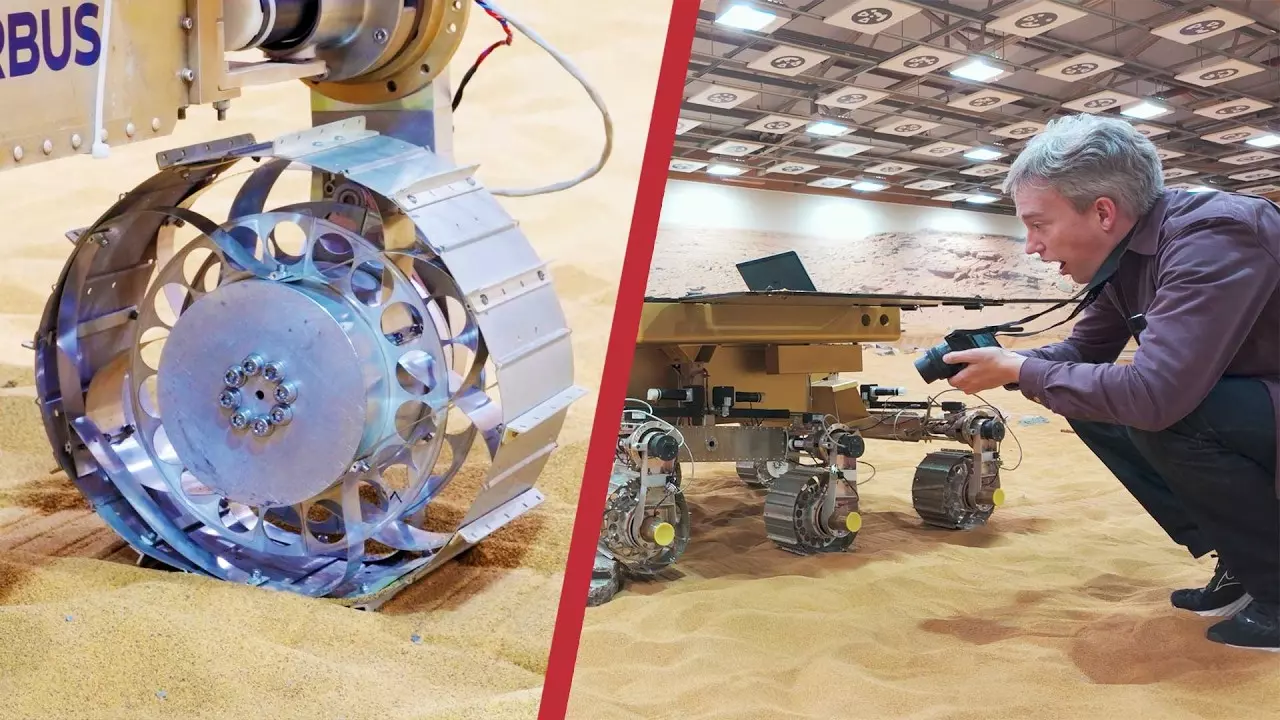
Engineers at Airbus, located at their Stevenage campus in the United Kingdom, are spearheading the development of the ExoMars rover's autonomous navigation systems. A key aspect of this development involves a prototype rover that is manually controlled for testing various functionalities. Intriguingly, this control is achieved using a customized Steam Deck. This handheld device enables engineers to intuitively steer the rover, moving it forward and executing a clever maneuver where the wheels turn 90 degrees with a simple 'bumper' press. This design eliminates the need for complex turning circles, significantly reducing the risk of the rover becoming immobilized on rocky surfaces, a critical consideration for extraterrestrial exploration.
The project is deeply rooted in extensive research, with Airbus' Defence and Space UK managing director, Kata Escott, noting that it represents the culmination of over two decades of dedicated work. While the ultimate goal is for the Rosalind Franklin rover to operate autonomously upon its projected 2030 arrival on the Red Planet, the Steam Deck's current role is invaluable. It facilitates the testing of mechanical, thermal, and propulsion systems, providing a practical and responsive control mechanism for the ground-based prototype. This demonstrates how even technologies initially conceived for entertainment can contribute significantly to scientific advancement and challenging space missions.
This pioneering application of a gaming device in space technology offers a fresh perspective on the potential for cross-disciplinary innovation. It challenges conventional thinking about the tools and interfaces suitable for high-stakes engineering, proving that practicality and intuitive design can originate from diverse fields. The integration of a consumer-grade gaming PC into such a sophisticated project underscores a broader trend: the increasing accessibility and adaptability of advanced computing platforms, even for endeavors as complex as Mars exploration. It suggests that the boundaries between different technological domains are becoming more fluid, leading to creative solutions that might otherwise be overlooked.
About the author
Mark Rosewater
Head designer for "Magic: The Gathering" and author of long-running insights on game design.