Achieving Perfectly Cooked Turkey: Temperature Guidelines and Recommended Tools
ByMaangchi
Ensuring a perfectly cooked turkey is crucial for both deliciousness and food safety. This guide highlights the significance of precise temperature measurement using specialized tools. It challenges conventional wisdom by suggesting that a slightly lower internal temperature can yield juicier results, provided certain time parameters are met for safety. The article also provides specific recommendations for thermometers that excel in accuracy and ease of use, helping home cooks achieve professional-level results.
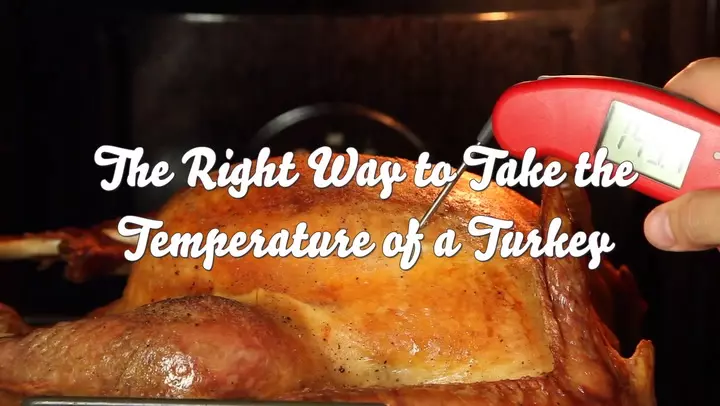
To guarantee a tender and succulent turkey, precise temperature measurement is paramount. While official guidelines recommend cooking turkey breast to 165°F (74°C), achieving a moist result often means aiming for 150°F (66°C), provided this temperature is maintained for at least 3.7 minutes. This approach ensures safety while maximizing juiciness, especially for brined birds. For accurate readings, it's essential to check the temperature in three specific locations: the thickest part of the breast, and where the thigh connects to the body, as well as the drumstick to the thigh. Using a reliable meat thermometer, such as the ThermoWorks Thermapen Nano for quick spot checks or the ThermoWorks Chef Alarm for continuous monitoring, is the only way to ensure ideal doneness without relying on unreliable visual cues. This method allows for a more controlled cooking process, preventing overcooking and preserving the turkey's natural moisture.
Optimal Turkey Cooking Temperatures
For a perfectly cooked and safe turkey, monitoring the internal temperature is key. The United States Department of Agriculture advises cooking turkey breast to 165°F (74°C). However, for a noticeably juicier outcome, many culinary experts suggest pulling the turkey when the breast reaches 150°F (66°C). This can be safely achieved because food safety is a function of both temperature and the duration it's held at that temperature. According to USDA data, turkey is safe for consumption if it maintains a temperature of at least 150°F (66°C) for a minimum of 3.7 minutes. This brief holding period effectively reduces bacteria to safe levels, ensuring that by the time the turkey has rested, it is both delicious and safe.
Achieving a safe and succulent turkey requires understanding the interplay between temperature and time. While the standard recommendation from government health organizations for turkey breast is 165°F (74°C), this can often lead to dry meat. A more nuanced approach, favored by many seasoned cooks, targets an internal breast temperature of 150°F (66°C). This lower temperature dramatically enhances the juiciness of the meat, particularly if the turkey has been brined. Crucially, this method is still safe, as food safety depends not only on the peak temperature but also on how long that temperature is sustained. Data from the USDA indicates that a turkey is fully pasteurized and safe to eat if it remains at or above 150°F (66°C) for at least 3.7 minutes. This means that by the time the turkey is removed from the oven and allowed to rest—a vital step that permits residual heat to distribute and juices to resettle—it will have achieved the necessary bacterial reduction for safe consumption, while also retaining maximum moisture and flavor.
Essential Tools for Precision Cooking
To accurately gauge your turkey's internal temperature and ensure optimal doneness, specialized thermometers are indispensable. The ThermoWorks Thermapen Nano is a top-tier choice for its rapid and precise temperature readings, taking just 0.4 seconds to display an accurate measurement. This speed is crucial when checking temperatures in various parts of a hot turkey, minimizing heat loss from the oven. For continuous monitoring throughout the cooking process, the ThermoWorks Chef Alarm is highly recommended. Its clear, rotating display and loud temperature alarms allow you to set a target temperature, such as 150°F (66°C), and be alerted when it's reached, reducing the need to frequently open the oven door and disrupt the cooking environment. These tools eliminate guesswork, making it easier to achieve a perfectly cooked turkey every time.
Selecting the right tools is fundamental for achieving culinary perfection, especially when preparing a turkey. The ThermoWorks Thermapen Nano stands out as the ultimate instant-read thermometer, offering unparalleled speed and accuracy. With a response time of just 0.4 seconds, it provides almost instantaneous readings, which is invaluable when quickly checking multiple temperature zones within the turkey, such as the deepest part of the breast and the thigh joints. Its automatic backlight further enhances usability in dim oven environments. For those seeking a more budget-friendly yet reliable option, the ThermoWorks ThermoPop 2 offers commendable accuracy within ±1°F and features a large, easy-to-read screen. Beyond instant-read checks, continuous monitoring is vital. The ThermoWorks Chef Alarm, praised for its robust design and user-friendly features, is the premier choice for a leave-in probe thermometer. Its loud, customizable temperature alarms alert you the moment your turkey reaches its target temperature, preventing overcooking and ensuring consistent results. By integrating these precise instruments into your cooking routine, you can master the art of turkey preparation, ensuring a juicy and safe dish for any occasion.
About the author
Maangchi
YouTube sensation and author dedicated to teaching traditional and modern Korean cooking.