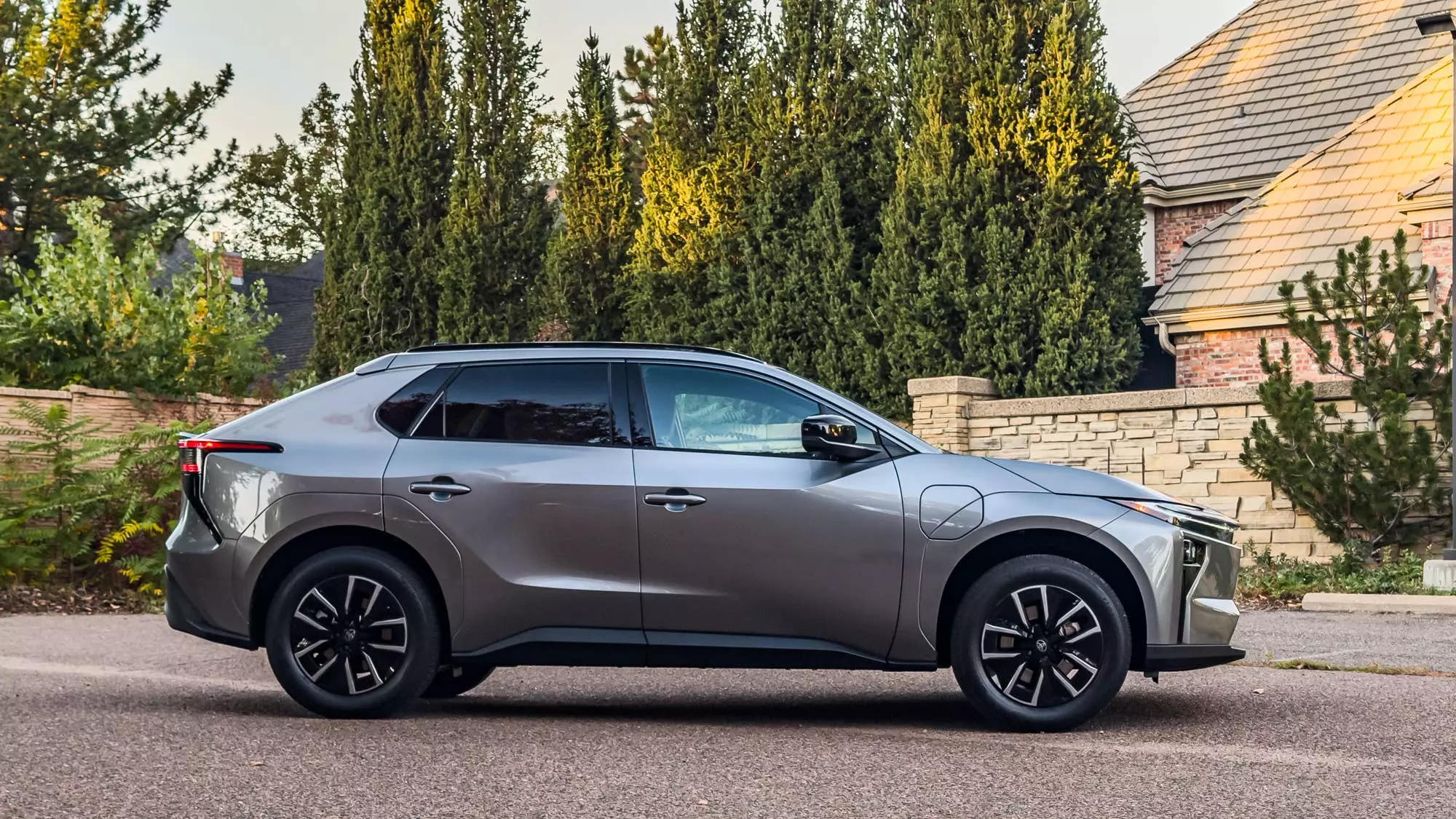
The 2026 Toyota bZ: A Week-Long Test Drive Reveals Key Enhancements
ByMichele Acquaragia
This article explores the transformation of Toyota's electric vehicle offering, detailing the significant upgrades found in the 2026 Toyota bZ. It highlights how these enhancements have reshaped the vehicle's performance, charging capabilities, and overall user experience, making it a more competitive and desirable option in the rapidly evolving EV market.
Experience the Evolution: Toyota's Electrifying Leap Forward
Seamless Power Connection: The New NACS Charging Standard Integrates Effortlessly
A pivotal enhancement in the latest Toyota bZ is the adoption of the North American Charging Standard (NACS) port, which now includes a compatible adapter. This more compact and streamlined charging interface significantly simplifies the process of connecting to charging stations. Furthermore, it unlocks access to Tesla's extensive Supercharger network, greatly expanding charging accessibility for owners. While many electric vehicle users primarily charge at home, the added convenience and widespread compatibility offered by the NACS port are invaluable, marking a significant step forward in user-friendly electric vehicle infrastructure.
Unleashing Dynamic Performance: A Significant Boost in Horsepower for an Exhilarating Drive
The previous iteration, the bZ4x, was often characterized by its modest acceleration. However, the all-wheel-drive variant of the new bZ model delivers a remarkably spirited performance. Boasting 338 horsepower, this version offers an undeniably enjoyable surge of power, even if the overall driving dynamics remain somewhat conventional. The bZ now achieves 0 to 60 mph in approximately 4.3 seconds, a speed typically associated with sports cars. This power is so substantial that it can occasionally challenge the vehicle's tire grip, with traction control engaging during aggressive cornering. Even the single-motor versions have received power upgrades, with standard models offering either 168 or 221 horsepower to the front axle.
Extended Journeys: Enhanced Range and Faster Charging Capabilities for Uninterrupted Travel
The base model of the bZ now offers an estimated range of 236 miles on a single charge, a notable improvement over its predecessor. For those seeking maximum travel distance, the front-wheel-drive XLE Plus variant, which also features increased power, extends the range to an impressive 314 miles. The all-wheel-drive model is rated for 288 miles, a sufficient distance for typical weekly driving needs. Charging times have also seen significant advancements. Toyota states that a 10% to 80% charge can be achieved in just 30 minutes at a DC fast charger. Additionally, AC charging is now more efficient, thanks to the integration of a new, higher-capacity 11-kW on-board AC charger, further reducing downtime and enhancing the overall convenience of owning an electric vehicle.
About the author
Michele Acquaragia
Fictional representative of the passionate journalists covering high-performance supercars and Italian design.