2026: A Breakthrough Year for Gaming Mouse Innovation
ByReiner Knizia
The landscape of gaming mice is undergoing a transformative period, with leading manufacturers pushing the boundaries of performance and technology. This year has witnessed the introduction of several innovative features, albeit at a premium cost, that are poised to reshape the competitive gaming hardware market. These advancements, originating from industry giants, are not only enhancing user experience but also setting new benchmarks that are likely to be adopted across the sector.
The Dawn of Next-Gen Gaming Mice: Unprecedented Innovation and High Costs
Premium Pricing and Market Evolution in Competitive Gaming Mice
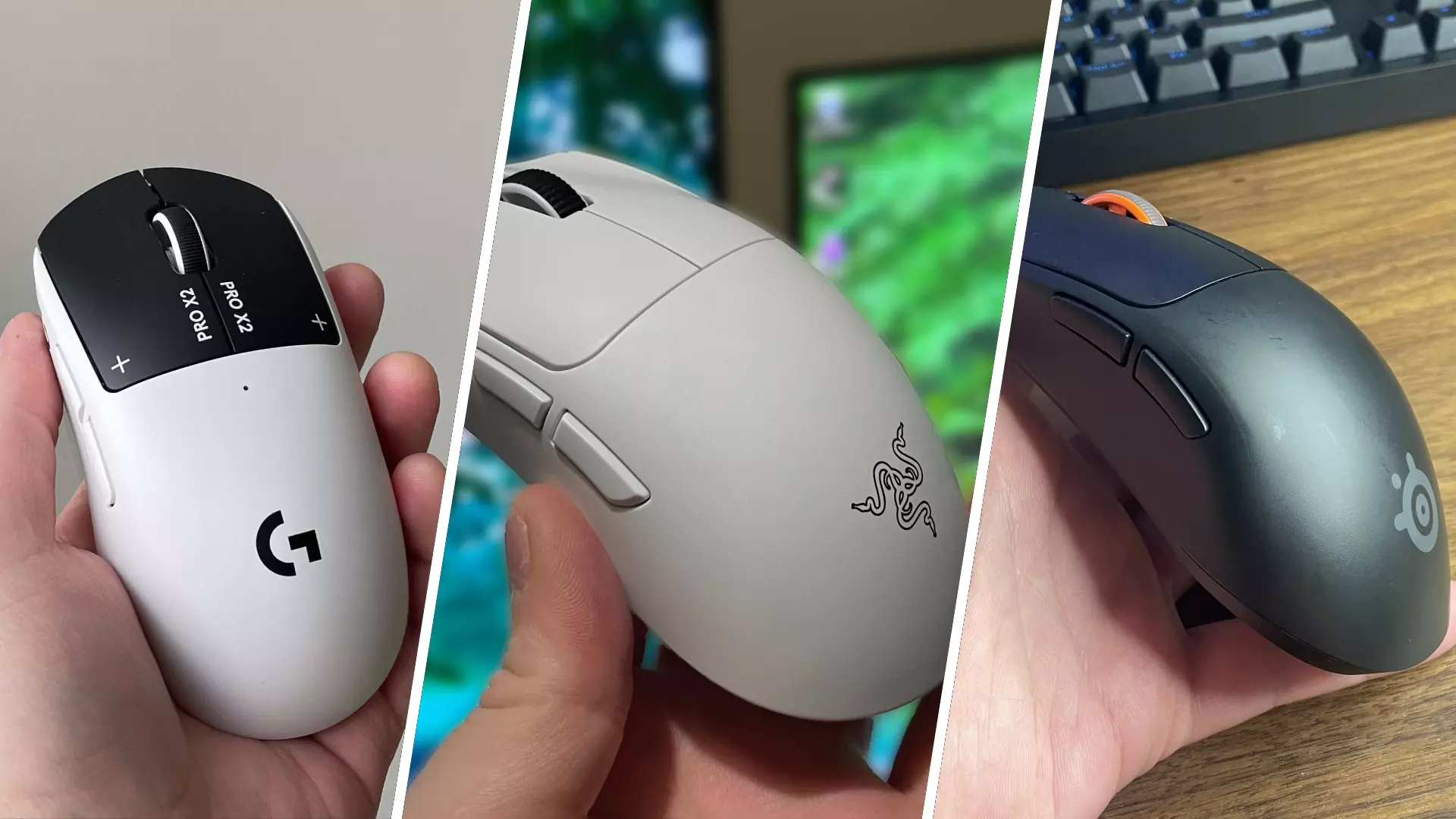
When considering high-performance gaming mice from major brands, the immediate thought for many is the elevated price. Recent releases certainly confirm this trend, with devices such as the Logitech G Pro X2 Superstrike, Razer Viper V4 Pro, and SteelSeries Rival Pro/Sensei Pro all featuring steep price tags ranging from $160 to $200. This pricing strategy reflects the significant investment in research and development behind these advanced peripherals.
The Transformative Impact of Leading Brands on Gaming Mouse Technology
Despite the high costs, these flagship products are undeniably propelling the competitive gaming mouse industry forward. Major brands possess the capacity to absorb development risks and launch extensive marketing campaigns, ensuring new technologies reach a broad audience. This year's innovations are a testament to this, introducing features that were previously unimaginable in mainstream gaming mice.
Logitech stands out with its Haptic Inductive Trigger System (HITS), a revolutionary analogue click technology. This system allows users to customize the actuation point of mouse clicks, reducing response time and enabling advanced techniques like rapid trigger. The integrated haptics provide tactile feedback, ensuring a consistent and satisfying click sensation regardless of the actuation depth. This technology was first brought to market by Logitech, influencing subsequent developments in the industry.
Razer's Innovative FrameSync for Enhanced Battery Efficiency
Razer's contribution to mouse technology this year is FrameSync, a feature designed to optimize battery life without compromising performance. Similar to Variable Refresh Rate (VRR) technology in monitors, FrameSync synchronizes the mouse sensor's optical captures with the microcontroller unit's polling rate. This synchronization minimizes unnecessary sensor activity, drastically extending battery life—the Viper V4 Pro, for instance, achieves up to 180 hours at 1 kHz polling. Independent tests have confirmed the efficacy of Razer's FrameSync, highlighting its practical benefits for gamers.
SteelSeries' Advancements in Wireless Connectivity and Polling Precision
SteelSeries has introduced its own set of innovations, including ultra-wideband (UWB) wireless connectivity and "true" 8K polling. UWB technology enhances wireless signal stability and reliability by utilizing different frequency bands, minimizing interference. The "true" 8K polling ensures that at 8 kHz, each data packet is sent individually rather than being bundled, providing a more precise and responsive experience. Additionally, the inclusion of hot-swappable batteries, while not entirely new, adds convenience and longevity to their devices.
The Broader Influence of Major Brands on Technological Adoption
The strategic risks taken by large brands in developing these cutting-edge technologies ultimately benefit the entire industry. By investing heavily in innovation, these companies establish the credibility and market appeal of new features. This widespread acceptance encourages smaller brands to integrate similar technologies into their products, fostering a dynamic environment of continuous improvement. The availability of working models from major players also provides valuable insights for other manufacturers, accelerating the technical refinement and broader adoption of these innovations.
The current era in competitive gaming hardware is characterized by significant technological leaps, primarily spearheaded by industry-leading brands. While the premium pricing of these advanced mice might initially deter some consumers, the innovations they bring—such as customizable haptic clicks, battery-optimizing FrameSync, and robust UWB wireless connectivity—are undeniably pushing the boundaries of what's possible. These developments are setting a new standard for performance, reliability, and user experience, ultimately enriching the entire gaming community as smaller manufacturers inevitably follow suit, making sophisticated technology more accessible.
About the author
Reiner Knizia
Prolific and award-winning board game designer with a PhD in mathematics, known for elegant game mechanics.