The 1991 Mazda MX-5 Miata Special Edition: A Stylish Yet Flawed Roadster
ByMichele Acquaragia
This article, originally featured in the August 1991 edition of Car and Driver, delves into the nuances of the Mazda MX-5 Miata Special Edition, offering a detailed critique of its aesthetic choices and functional features.
The 1991 Mazda MX-5 Miata Special Edition: A Blend of Elegance and Oversight
An Unfortunate Color Choice: The Black Soft Top Dilemma
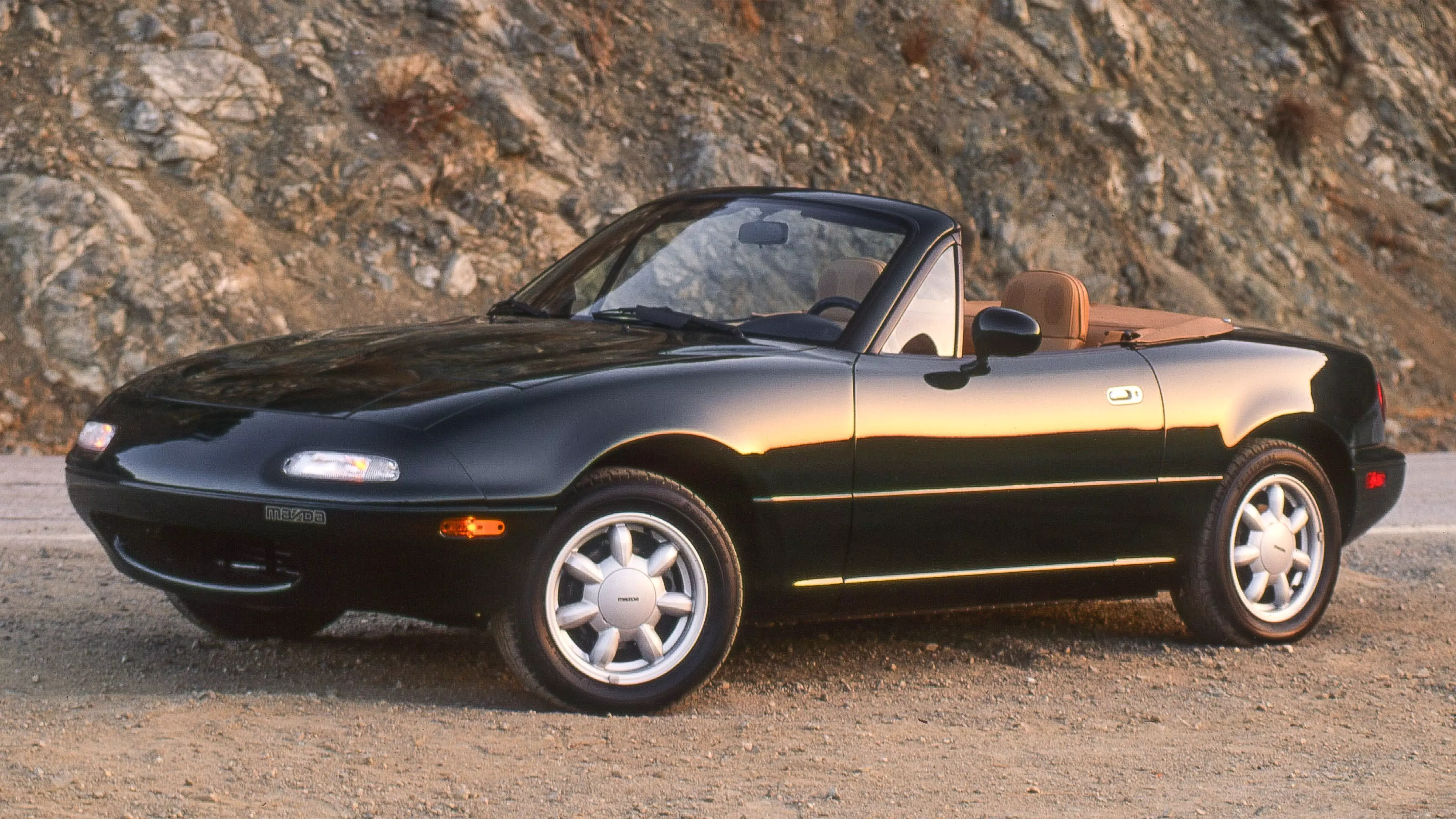
The 1991 Mazda MX-5 Miata Special Edition presents a perplexing visual contrast with its British Racing Green exterior and a lavish beige interior, featuring leather seats, carpeting, and a tonneau cover. However, a noticeable design misstep is the standard black convertible roof. This choice clashes significantly with the otherwise cohesive beige theme, a detail that the manufacturer unfortunately did not rectify, even with a beige soft top option being potentially available in subsequent years, but not for this specific special edition.
Interior Refinements and Material Choices
Beyond its color palette, this Miata variant boasts several upscale touches. It includes stainless-steel door sill scuff plates, reminiscent of classic British roadsters, power steering, and a limited-slip differential. The steering wheel, wrapped in black leather, though functional, would have been more aesthetically pleasing in beige to match the cabin. The gear shift knob and handbrake grip are crafted from highly polished wood, with the Nardi knob featuring a unique rubber strip to prevent hand slippage. It's worth noting that while the seats are genuine leather, other beige interior surfaces are made from vinyl, not leather.
Enhanced Features for a Limited Edition Model
Despite the production run of 4000 units, which might not seem "limited" to some, this Special Edition Miata introduced several features not present in its spiritual predecessor, the Lotus Elan. These additions include cruise control, a CD player, and integrated headrest speakers. The cruise control, however, is considered a questionable inclusion given the Miata’s tendency for instability at highway speeds.
The Challenges and Design of the Beige Tonneau Cover
A distinctive accessory for this model is the beige vinyl tonneau cover, designed to completely shield the cockpit. Installing it is a somewhat strenuous task, often requiring considerable effort and patience to secure it properly with Tenax fasteners. While the cover provides a snug fit, its right-side leading edge is thoughtfully lined with black vinyl to reduce windshield glare. This design encourages a "split tonneau" usage, where the passenger side remains covered, offering a discreet way to transport companions. A minor drawback, however, is that one of the tonneau’s fasteners obstructs the passenger-side window, leading to significant wind buffeting above 60 mph, which can cause the tonneau to flap.
Available Options and a Questionable Automatic Transmission
Only a few additional options were available for the Special Edition Miata: anti-lock brakes for $900, and a detachable hard top for $1400. Mazda also offered a four-speed automatic transmission, which, according to the manufacturer, transformed the car into an entirely different model, notably without the limited-slip differential, and priced at $20,039. The author strongly objects to the idea of an automatic transmission in a Miata, advocating for its prohibition.
The Value Proposition of a Premium Miata
While the MX-5 Special Edition possesses undeniable appeal, its price point of nearly $20,000 raises concerns about its overall value. The $4949 premium for the package might be more justifiable if the convertible top matched the beige interior (a detail repeatedly highlighted) or if Mazda had truly committed to the "special edition" concept by adding a significant power boost, such as an extra 20 or 30 horsepower. Such an upgrade, regardless of the soft top’s color, would have undoubtedly made this Miata a more coveted collector’s item.
About the author
Michele Acquaragia
Fictional representative of the passionate journalists covering high-performance supercars and Italian design.